



Team Canada 2026 Olympic Hockey Roster
As the 2026 Winter Olympics in Milano?Cortina approach, the global hockey spotlight...

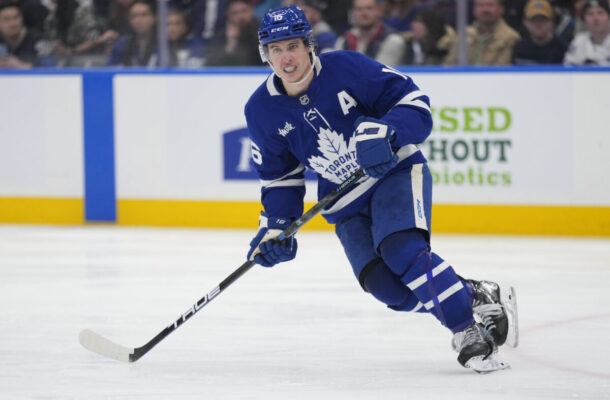
The Mitch Marner Trade Was a Mistake — And the Toronto Maple Leafs Are Already Feeling It
For nearly a decade, Mitch Marner was more than just a player on the Toronto Maple Leafs. He was part of the identity. Part of the DNA. Part of the “Core Four” that defined an era of Leafs hockey built on speed, skill, and offensive firepower.
And now he’s gone.
On July 1, 2025, Toronto officially moved on from Marner in a blockbuster sign-and-trade that sent him to the Vegas Golden Knights. In return, the Leafs received Nicolas Roy — a dependable, two-way forward who brings size, physicality, and responsible hockey.
But let’s be honest here: this wasn’t a hockey trade. This was a philosophical trade.
Toronto didn’t just move Mitch Marner. They moved away from the type of team they have been trying to build since the rebuild began.
And early signs suggest that, in doing so, they may have made one of the biggest strategic mistakes of the Auston Matthews era.
The Myth: “Marner Was the Problem”
For years, a portion of the Leafs fanbase embraced a simple narrative: Mitch Marner was the problem. Overpaid. Too fancy. Not tough enough. Disappeared in big moments. Not built for playoff hockey.
And when a team keeps falling short in the postseason, fans need a lightning rod. Someone to blame. Mitch Marner, because of his salary and visibility, became that person.
But here is the inconvenient truth:
Toronto didn’t lose because Mitch Marner was on the team. They lost in spite of the fact that Mitch Marner was on the team.
This wasn’t a guy who dragged the Leafs down. It was a player who gave them a chance to win nearly every night. A player who routinely finished near the top of the NHL in assists. A player who boosted everyone he played with.
It’s easy to blame a highly paid star when the season ends early. It’s much harder to admit that the team around him wasn’t structured properly to go the distance.
What Mitch Marner Actually Brought to the Leafs
Let’s ignore emotion and look at substance.
Mitch Marner wasn’t just a winger. He was:
In the 2024–25 season, Marner recorded 100 points (27 goals, 75 assists). But even that stat line fails to fully highlight his value. Because what made Marner special wasn’t always the final touch — it was the second before the goal. The pass before the pass. The move that opened the ice.
When Marner was on the ice, Toronto:
He was a difference-maker in a way that doesn’t always show up on the highlight reel — but absolutely shows up in the analytics and in the results.
That kind of player is incredibly rare.
And Toronto let him go. There is no denying it that the Mitch Marner trade was a mistake.
The Trade Itself: A Massive Talent Drop-Off
Let’s strip things down to a basic hockey comparison:
Mitch Marner ? Nicolas Roy
That’s what this boiled down to on the roster.
Now, Nicolas Roy is not a bad player. In fact, he’s a very good NHL forward in the right context. He’s strong on the puck, hard to play against, and useful in all defensive situations. He does the dirty work. He’s valuable in the playoffs.
But what he isn’t — and never will be — is a game-breaking offensive talent.
This wasn’t a lateral move. It wasn’t even a “different but equal” swap.
It was a massive step down in raw skill and impact.
Toronto didn’t replace Marner’s production. They didn’t replace Marner’s creativity. They merely shifted their identity and hoped the totality of the team would pick up the slack.
That is astronomically risky when you’re in the middle of a championship window.
The Matthews Factor: The Missing Ingredient Nobody Is Talking About
Auston Matthews is the face of the franchise. One of the greatest goal-scorers the league has ever seen. A generational shooter.
But this part matters: Matthews is a finisher first, not a primary creator.
He benefits enormously from playing with elite playmakers — players who can pull defenders away, create space, and deliver the puck exactly where it needs to be.
For most of his career, that guy was Mitch Marner.
Marner didn’t just support Matthews. He enhanced him. Elevated him. Made defending him a nightmare.
Now that Marner is gone, Matthews has more responsibility to create offense himself. Teams can key in on him more aggressively. They can clog the middle. They can dare other Leafs to step up and beat them instead.
The result? Matthews is still great. Still produces. But the offense doesn’t flow the same way. There’s more resistance. More forced plays. More stretch passes without the same surgical precision.
Toronto didn’t just lose Marner. They made Matthews’ job harder. Proving once again that the Mitch Marner trade was a mistake.
What Happens to the Power Play Without Marner?
Toronto’s power play was once a terrifying thing to face. It was dynamic. Deceptive. Dangerous from every angle.
A major reason?
Mitch Marner’s brain.
He was the quarterback. He dictated the pace. He disguised intentions. He pulled defenders out of position. He knew when to shoot, when to pass, when to hold, when to strike.
Remove him, and you remove the intelligence at the heart of the unit.
Now Toronto is trying to rebuild their power-play identity. New formations. New looks. New responsibilities. More predictability. Less improv.
Does it still generate looks? Yes.
Is it the same level of threat? No.
Power plays aren’t just about talent — they’re about timing, chemistry, and deception. That takes years to build. Toronto destroyed theirs in one transaction.
The Illusion of “Cap Flexibility”
One of the biggest arguments in defense of the Marner trade is this: cap flexibility.
And on paper, it makes sense. Free up salary. Spread resources. Build depth. Avoid being top-heavy. Build a more “balanced” lineup.
But here’s the dirty secret of the NHL:
Stars win Cups. Not balanced depth charts.
Every Stanley Cup winner has elite difference-makers. Players who tilt the ice. Players who scare opponents. Players who demand special game plans against them.
You don’t remove an elite star and replace him with “cap flexibility.” You replace him with another elite star.
If Toronto uses that cap space to acquire another top-tier playmaker, this move might eventually make sense. But if that space gets eaten up by mid-level role players and short-term fixes, the decision will look historically bad.
You don’t trade brilliance for accounting advantages.
Toronto’s Biggest Danger: Becoming “Good” Instead of “Great”
This is the real fear for Leafs Nation.
Not that the team will collapse.
Not that they’ll be terrible.
Not that the arena will be empty.
But that they will become…good.
Not elite.
Not terrifying.
Not a real Stanley Cup threat.
Just…good enough.
The worst place to be in professional sports isn’t last place. It’s the middle. Too good to rebuild. Too weak to contend.
Trading Mitch Marner increased the risk that Toronto becomes that exact type of team.
Competitive.
Respectable.
But not dangerous enough.
And in a league as ruthless as the NHL, that’s a slow death.
Was Marner Perfect? No. But That Wasn’t the Point.
Yes, Marner had bad playoff games.
Yes, there were moments of frustration.
Yes, he received fair criticism.
But perfection isn’t the qualification for keeping an elite player.
Value is.
And Marner’s value was never truly replaced.
Toronto didn’t just trade a player. They abandoned a formula that, with the right complementary pieces and adjustments, actually could have led to a Stanley Cup. Instead of fixing the supporting cast…they sacrificed one of the core pillars. That is backwards team-building and places the exclamation mark on the statement that the Mitch Marner trade was a mistake.
The Pressure Now Is Immense
Here’s the reality: from this point on, every season will be judged against one metric.
“Was trading Mitch Marner worth it?”
If Toronto wins the Stanley Cup soon? The move is genius.
If Toronto stalls out, exits early, or hovers in no-man’s-land? The move becomes infamous.
There is no neutral outcome anymore.
Because you don’t trade away a 100-point elite playmaker without tying it to ultimate success.
Every goal he scores in Vegas…
Every highlight pass he makes…
Every deep playoff push he fuels…
…will haunt Toronto if they fall short.
The Psychological Impact Nobody Is Measuring
Hockey is a mental sport as much as it is physical. Chemistry matters. Comfort matters. Trust matters.
Players knew what to expect from Marner. They knew his tendencies. They trusted his decisions. They fed off his creativity.
Now that stability is gone.
Lines shuffle more often. Roles change. Confidence fluctuates.
A single trade can alter the psychological structure of a room. It removes safety. It introduces uncertainty.
If Toronto doesn’t find a new emotional leader and play-driving presence quickly, the ripple effects will reach far beyond the stat sheet.
The Leafs Now Live On a Gamble
That’s the best way to describe this.
Toronto gambled.
They gambled that Marner wasn’t essential.
They gambled that balance would replace brilliance.
They gambled that other players would evolve quickly into bigger roles.
They gambled that “culture change” would equal “Cup results.”
And in the NHL, gambles can cost decades.
Bottom Line: You Don’t Trade Players Like Mitch Marner
You build around them.
You protect them.
You supplement them.
You get them help.
But you don’t remove them from a contender while your franchise player is in his prime.
Mitch Marner made the Toronto Maple Leafs better every time he stepped on the ice.
Now the Leafs must prove they can be better without him.
So far?
The answers are uncomfortable.
The offense is less fluid.
The danger level has dropped.
And the margin for error is razor-thin.
The trade may have been logical on paper.
But hockey isn’t played on paper.
It’s played on ice.
And on the ice, Mitch Marner is the exact type of player you never let walk away.

As the 2026 Winter Olympics in Milano?Cortina approach, the global hockey spotlight...

Brady Tkachuk is frequently described as the heartbeat of the Ottawa Senators...

Let’s stop pretending. Let’s stop dancing around feelings, jerseys, and goal highlights....

Macklin Celebrini’s Rise: How the NHL’s Newest Young Star Is Redefining the...

Newfoundland Hockey Talk has learned that there is considerable doubt surrounding the...

The current makeup of Triple “AAA” Peewee and Bantam hockey within our...

Newfoundland Senior Hockey has seen its share of controversy in the past....

With the Corner Brook Royals in Gander this weekend for some hockey...